Macular Degeneration

About Macular Degeneration

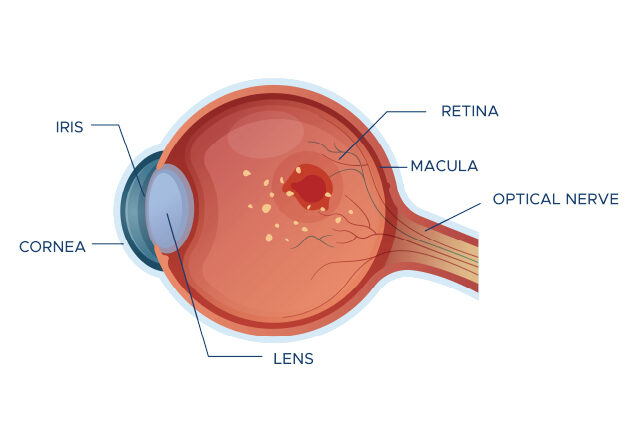
Age-related macular degeneration (AMD) is the most common cause of severe vision loss in patients over 65. This condition involves a breakdown of the macula, the central part of the retina responsible for detailed visual tasks such as reading and driving.

What Causes Macular Degeneration?

Many older people develop macular degeneration as part of the body’s natural aging process. Our eyes and retina develop signs of aging just as our skin shows signs of the aging process. Exactly why it develops is not known, and there is no cure available.

Two Types Of Macular Degeneration

Most people with AMD have the “dry” type. It is caused by the aging and thinning of the tissues of the macula. Vision loss is usually gradual. Deposits under the retina called drusen are a common feature of AMD. Drusen alone usually do not cause vision loss, but when they increase in size or number, this generally indicates an increased risk of developing advanced “wet” AMD. The dry type can progress into the “wet” type, and this accounts for about 10 percent of all patients with AMD. Wet AMD results when abnormal blood vessels develop underneath the retina at the back of the eye. These new blood vessels are fragile and often leak fluid or blood, causing blurry central vision. In contrast with dry AMD, patients with wet AMD often, but not always, experience sudden and severe vision loss.
Infographic depicting atrophic age-related macular degeneration
Infographic depicting exudative macular degeneration

Macular Degeneration Symptoms

When the macula does not function correctly, your central vision can be affected by blurriness, dark areas, or distortion. The degree of macular damage can vary from patient to patient, and symptoms can range from mild to severe. In the vast majority of cases, AMD does not automatically progress to blindness. Although AMD reduces vision in the central part of the retina, it usually does not affect the eye’s peripheral, or side, vision. Even patients with advanced macular disease tend to retain excellent peripheral vision.

Diagnosis and Tests for Macular Degeneration

During your initial visit for macular degeneration, you will have a detailed eye examination after your pupils are dilated. Sometimes it is difficult to distinguish between dry and wet AMD. Thus, our physicians may recommend a variety of clinical tests in order to make an accurate diagnosis. These tests may include fluorescein angiography (FA) and optical coherence tomography (OCT). FA involves the injection of a small amount of vegetable-based dye through a patient’s peripheral vein, usually the arm or hand. The dye is not the same contrast dye used for CT scans, and thus, it is generally safe even for patients with abnormal kidney function. After the dye is injected, an ophthalmic photographer will take a series of time-dependent photographs as the dye circulates through the blood vessels in your retina. The dye lights up areas of abnormal and leaky blood vessels. Not only is this useful for determining the extent and progression of the disease, but it also helps target specific treatment areas, compare disease progression, and assess treatment efficacy.

OCT is a non-invasive, quick photograph that uses light rays to measure the thickness of the retina. OCT provides a detailed, high-magnification cross-sectional view of the retina at the microscopic level. It can often reveal tiny areas of leakage not readily apparent during an exam. An OCT photograph is not an X-ray and is not harmful to your eyes.

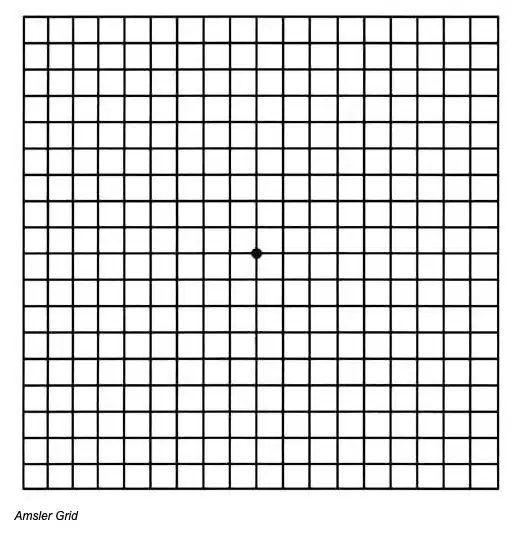
Early detection of macular degeneration is important and often leads to a better visual prognosis. As a result, every patient diagnosed with macular degeneration should establish a daily routine for monitoring their own vision. This is reliably performed with an Amsler grid, a simple paper with straight horizontal and vertical lines similar to graph paper. We are happy to provide you with an Amsler grid at no cost; simply ask one of our nurses. New waviness, broken lines, missing lines, or dark spots on the Amsler grid can be warning signs of AMD progression.

If you are at high risk for developing wet AMD, you can now take a proactive approach to your eye health.

Frequent monitoring with the ForeseeHome™ AMD Monitoring Program provides a safety net to detect changes in your vision between office visits, allowing your doctor to diagnose wet AMD at its earliest stage.

Amsler Grid - Distortion Reference
Macular Degeneration Treatments

Although the exact causes of AMD are not fully understood, antioxidant vitamins and zinc may reduce the risk of progression of AMD in some people. A large scientific study found that people at risk of developing advanced AMD reduced their risk by about 25 percent when treated with a high-dose combination of vitamin C, vitamin E, zinc, and beta carotene. Not everyone may benefit from using these supplements, especially those patients with either no AMD or very early AMD. Patients who smoke are encouraged to use a vitamin formulation without beta carotene, as this high dose has been suggested to increase the risk of lung cancer in patients who smoke. Ask your doctor if you should consider vitamin supplementation.

Avastin and Lucentis are the first medicines that have actually improved vision for many patients with wet AMD. These medications are injected into the eye and help to block certain growth factors that cause abnormal blood vessels to “leak” in wet AMD. While the thought of an injection in the eye might cause many people to cringe, in our experience, there is little or no discomfort, and the spectacular visual gains far outweigh any fears.

Although we have made significant progress in the fight against AMD, we still do not have a treatment that can restore vision to normal levels. Despite advanced medical therapy, many people with macular degeneration still experience some vision loss. The physicians at Retinal Consultants are dedicated to providing the latest technology available to treat AMD. We are actively involved in multiple clinical research trials in hopes of finding the next “cure.” Ask your doctor if you may be a candidate for one of our clinical research trials.

Diagnostics with ForeseeHome

There is currently no cure or treatment for dry AMD, but there are steps you can take to reduce your risk of developing wet AMD. These include healthy lifestyle choices, such as not smoking and taking AREDS2 vitamins daily if recommended by your doctor. It’s also important to monitor your eyes with at-home testing between office visits. Advanced home monitoring technology is available that is sensitive to changes in AMD. The ForeseeHome® AMD Monitoring Program is an easy-to-use early warning system for your eyes that can detect the progression from dry to wet AMD as soon as it occurs, allowing your doctor to step in sooner and determine the appropriate course of action. People preserved more of their vision when wet AMD was detected using ForeseeHome between office visits, in addition to their doctor’s standard of care. ForeseeHome is FDA-cleared and covered by Medicare.

Learn more about ForeseeHome

Diagnostics for AMD

Request an Appointment

Please fill out the form below and one of our team members will get in touch with you directly to schedule your appointment.

(602) 222-2221

Your browser does not support iframes. The contact form cannot be displayed. Please use another contact method (phone, fax etc)

FAQs Macular Degeneration

Early macular degeneration may not cause obvious symptoms. As it progresses, patients may notice blurry central vision, dark or blank spots, distorted lines, difficulty reading, trouble recognizing faces, or wavy vision on an Amsler grid.

Dry macular degeneration is more common and usually progresses gradually as the macula ages. Wet macular degeneration happens when abnormal blood vessels grow under the retina and leak fluid or blood. Wet macular degeneration can cause more rapid changes in central vision and requires prompt evaluation.

Macular degeneration can cause central vision loss, but it usually does not affect peripheral, or side, vision. Even patients with advanced macular degeneration often keep side vision, though central tasks like reading, driving, and recognizing faces may become difficult.

Macular degeneration is diagnosed through a dilated retinal exam and may include imaging tests such as optical coherence tomography (OCT) or fluorescein angiography. These tests help your retina specialist evaluate the macula, look for fluid or leakage, and determine whether the condition is dry or wet.

Treatment depends on the type and stage of macular degeneration. Some patients with dry macular degeneration may benefit from monitoring, lifestyle changes, and AREDS2 vitamins if recommended by their doctor. Wet macular degeneration is often treated with eye injections that help reduce leaking from abnormal blood vessels.

There is no guaranteed way to prevent macular degeneration. However, you may reduce your risk or support eye health by not smoking, eating a healthy diet, managing your blood pressure, protecting your eyes from ultraviolet light, and having regular eye exams, especially if you have a family history of AMD.

ForeseeHome® is an at-home monitoring program for patients at high risk of developing wet macular degeneration. It helps monitor changes between office visits and may help detect wet macular degeneration earlier, so your retina specialist can evaluate changes and recommend the next step.

Hear what patients are saying

I’ve been a patient at Retinal Consultants for almost 3 years and get the best care regarding Macular Degenerative Disease. It’s a progressive disease but is under control due to the professional service provided.

Sue B.

The staff and surgical team, anesthesiologist, nurses and others were very friendly and courteous. Thank you for a job well done.

Kat H.

The recent visit was punctual and professional. The doctor listened to my concerns. I would definitely recommend Retinal Consultants.

Daniel G.